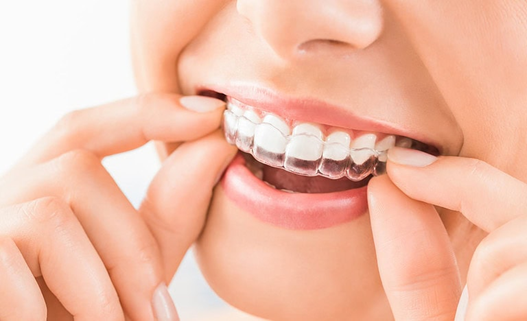
With so many clear aligner options available, patients often wonder: Should I choose DIY aligners or Invisalign®? While both use transparent trays to straighten teeth, the differences in safety, supervision, customization, and long-term results are significant. At Anant Dental Clinic Orthodontic and Implant Center, Ahmedabad, we help patients understand the pros and cons before making the right choice.
DIY Aligners vs. Invisalign: Key Differences
| Feature | DIY Aligners | Invisalign |
|---|---|---|
| Supervision | Remote or none. No in-person checkups. | Continuous in-person care by a licensed orthodontist. |
| Initial Assessment | Home impression kit or photo submission. | In-office digital 3D scan (iTero) + full dental evaluation. |
| Treatment Planning | AI/technician-generated plan. | Custom plan designed by orthodontist using advanced software (ClinCheck®). |
| Monitoring | Some brands offer photo check-ins. | Regular in-person visits + AI monitoring for accuracy. |
| Case Complexity | Only very mild cosmetic cases. | Treats mild to complex cases: crowding, bite issues, rotations. |
| Attachments | Not available. | Uses attachments (tooth-colored bumps) for precise tooth movement. |
| Additional Tools | None or limited. | May include elastics, IPR, refinements for best results. |
| Risk Level | Higher risk – lack of clinical oversight may cause gum/tooth damage. | Safer – professional monitoring reduces risks. |
| Final Results | Unpredictable; may fall short. | More predictable, stable, and long-lasting. |
| Aftercare | Sometimes includes retainers. | Always includes retainers + long-term retention planning. |
When DIY Aligners Might Work
- Very minor crowding or spacing issues
- Patients on a limited budget
- Willing to accept minimal support and higher risks
When Invisalign Is the Better Option
- Moderate to severe misalignment
- Bite problems (overbite, underbite, crossbite)
- Patients who want safe, personalized orthodontic care
- Long-term, predictable, and professional results